par Gamache Média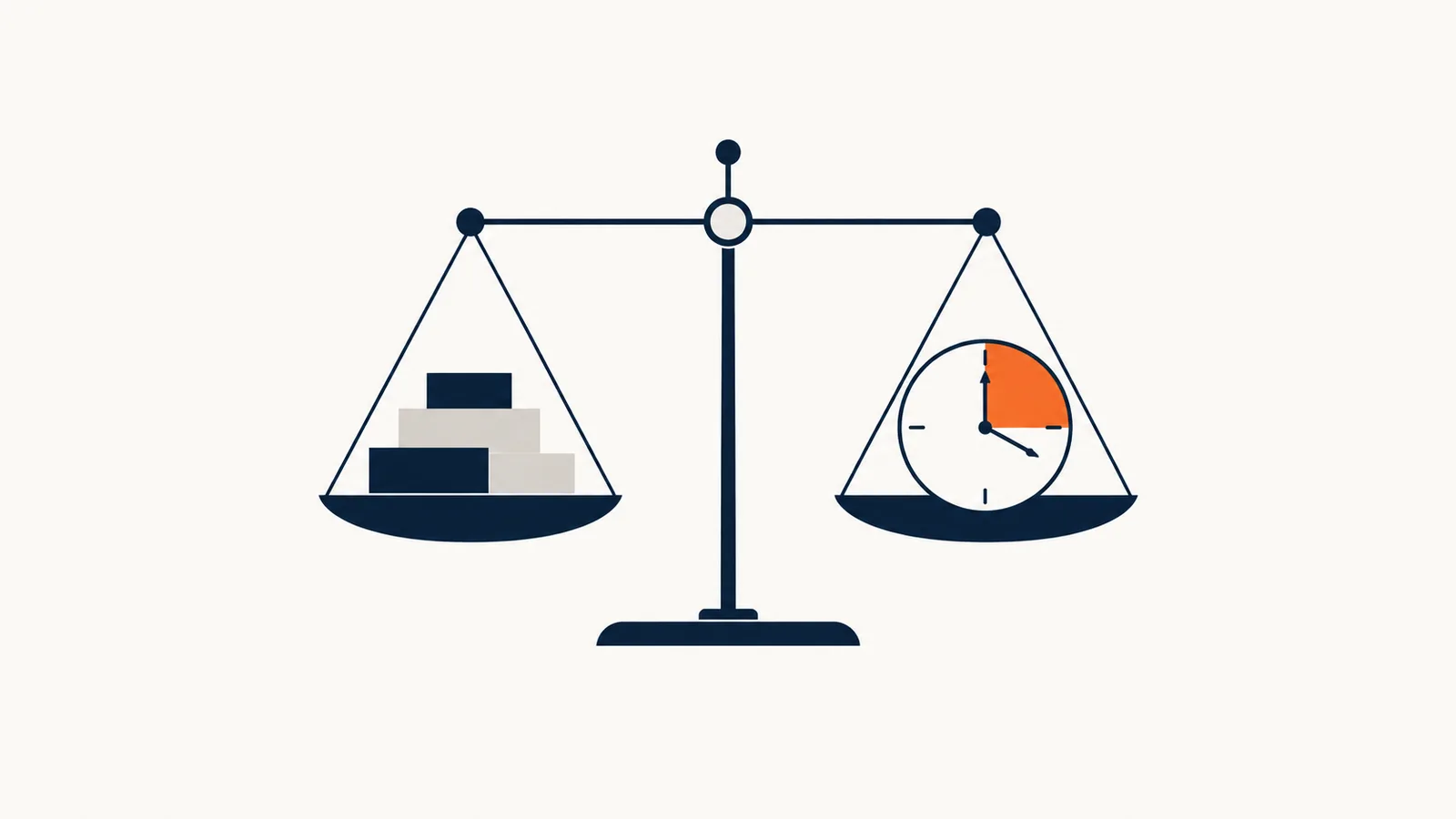
The cost of an artificial intelligence project depends on the work involved: the information to prepare, the software to connect, the features to build and the support needed after launch. To compare proposals, separate setup costs from recurring fees and check exactly what each amount covers.
In brief
- There is no single price: cost follows scope.
- Separate setup from recurring fees, and count your own team's time.
- Estimate value from time you have actually observed, not from a promise.
- Compare vendors on the same basis: inputs, outputs, connections, approvals, exceptions.
Without knowing the scope, quoting a single price would give a false sense of precision. An automation that transfers a few fields and an assistant that draws on several sources with different permission levels are not the same amount of work.
What line items should appear in the budget?
| Line item | What to spell out |
|---|---|
| Analysis | Process observed, needs selected and scoping deliverables |
| Data preparation | Sources, duplicates, organization and missing information |
| Configuration and development | Features included and items out of scope |
| Connections | Software involved, available access and error handling |
| Testing | Scenarios tested, acceptance criteria and planned fixes |
| Training | People supported and materials provided |
| Operations | Subscriptions, usage, hosting and monitoring |
| Ongoing changes | Support, maintenance and future modifications |
Add your own team's time. Someone will have to explain how things work today, prepare the examples and check the results. That work can make or break the project even though it never shows up on the vendor's invoice.
What drives the cost up or down?
Structured data and software that offers a suitable connection can make a project easier. On the other hand, scattered files, conflicting rules or complicated access can add to the preparation work.
The number of exceptions matters too. "Create a record from a form" sounds simple until you have to deal with duplicates, missing attachments and customers who already exist in the CRM. Those situations need to be discussed before launch.
The level of reliability you expect also shapes the scope. Preparing a draft that the team reviews and automatically sending out a sales offer are not equivalent requests.
How do you estimate value without inventing a return?
Here is a purely illustrative example. It is neither a client result nor a Gamache.ai rate.
A task takes 15 minutes and comes up 80 times a month: that's 20 hours of work. If the pilot brings the total time, checks included, down to 6 minutes, the task now takes 8 hours. The capacity freed up is 12 hours a month.
Assuming a fully loaded hourly cost of $40, that works out to $480 a month worth of work capacity. That amount is not automatically money in the bank. You still have to subtract the recurring fees and consider how the time will actually be used.
The calculation to remember is simple: task volume × the time difference you actually observed, followed by a look at the costs and at what the freed-up time is worth. If quality drops or corrections are left out, the calculation overstates the project's value.
How do you compare two proposals?
Ask each vendor to describe the inputs, outputs, connections, approvals and exceptions they will handle. Check who holds the access credentials, how your data can be retrieved and what happens if you switch vendors.
Also pin down the variable fees, the usage caps and the support provided when a third-party tool changes. The build price alone doesn't tell you what it will cost to use.
How do you get a scope that can be priced?
A well-defined first project gets you a more useful proposal: one task, some examples, an expected result and acceptance criteria. Our guide to choosing your first AI project can help you pull those pieces together.
At Gamache.ai, our consulting and implementation work starts from the way your business runs. Let's talk about your project and sort out the setup, the tools required and the support to plan for.
Frequently asked questions
Can you get a price before the project is defined?
Not a reliable one. Without a scope, a number means nothing. A short scoping step covering one task, some examples and an expected result gets you a proposal you can compare from one vendor to the next.
What are the recurring fees of an AI project?
Software subscriptions, usage-based AI model costs, hosting, monitoring and maintenance when the connected tools change. Ask for them in writing, along with their caps.
Is time saved the same as money saved?
Not automatically. It is freed-up capacity. It turns into value if it's used to handle more requests, follow up with customers more closely or avoid a new hire, and that depends on your decisions, not on the tool.
Is a small project worth it?
Often, yes. A limited scope costs less, is easier to measure and lets you decide on next steps based on facts rather than promises.