par Gamache Média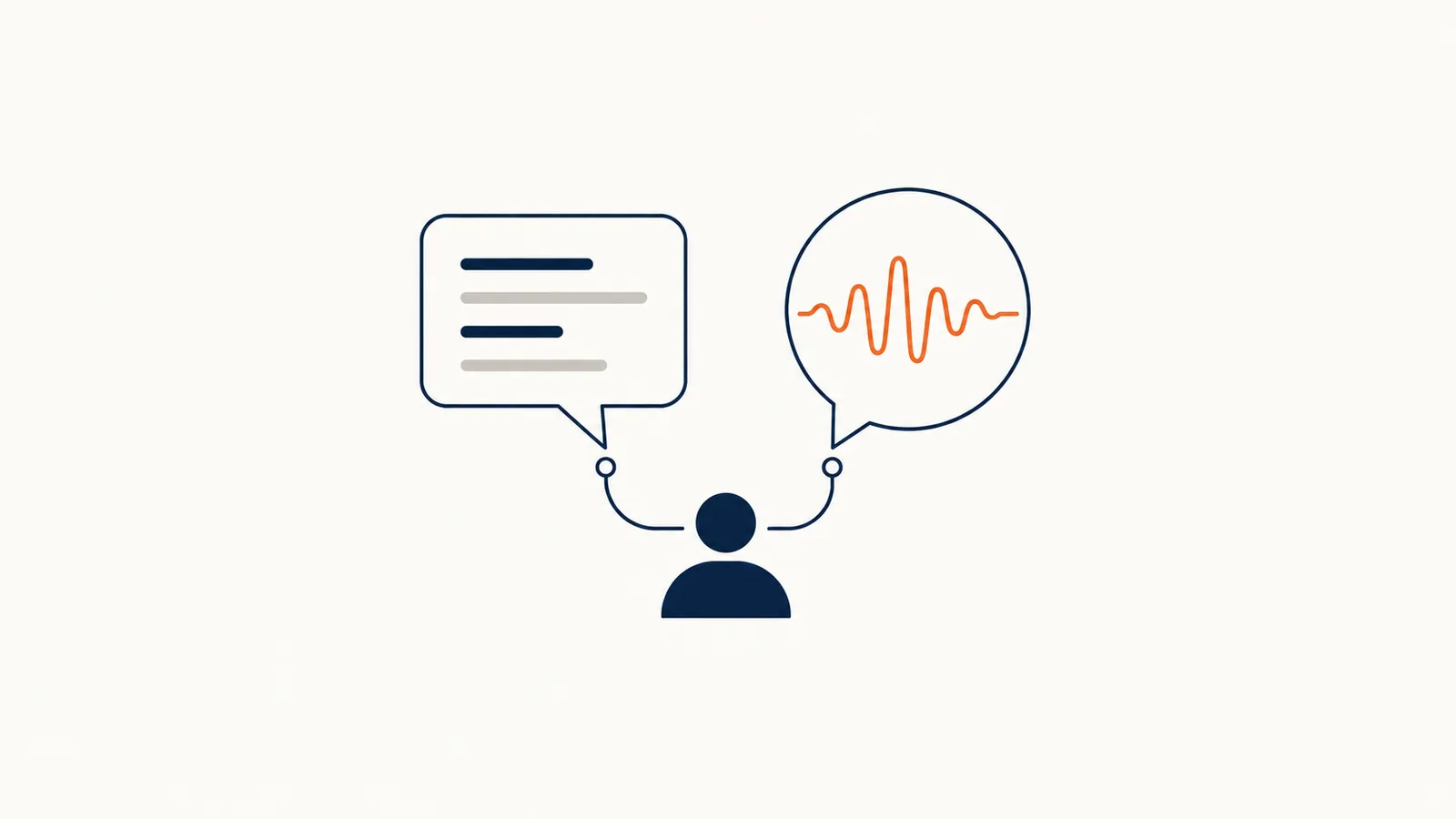
A chatbot answers in writing, usually on a website or in a messaging app. A voice assistant handles a conversation over the phone or by voice. For a small business, the right choice depends on the channel your customers use, the questions you need to handle, and how your team picks up the requests from there.
In brief
- Pick the channel your customers already use: your website or your phone line.
- The assistant answers from information that has been approved and is kept up to date.
- The handoff to a person has to be built into the scenario, not bolted on afterward.
- Measure answer quality and the requests that get passed along, not the number of conversations.
Before you choose, look at the conversations already coming in. A tool on your website won't necessarily fix missed calls, and a phone assistant isn't necessarily the best way to explain a detailed catalog.
Which requests should you start from?
Gather examples of common questions: business hours, services offered, how a service call works, documents to have ready, or a callback request. Identify the ones that can get a consistent answer from approved information.
Set aside the requests that call for judgment: special pricing, a complaint, a sensitive file, an emergency, or an unusual commitment. The handoff to a person has to be part of the scenario.
Every reference document needs an owner. An assistant that relies on outdated information can repeat the same mistake across many conversations.
How do the two channels compare?
| Criterion | Website chatbot | Voice assistant |
|---|---|---|
| Starting point | The visitor is browsing your website | The customer is calling your business |
| Information to share | Links, written explanations, references | Short answers, spoken clarification, contact details |
| Handoff to a person | Messaging or a contact request | Transfer or callback, depending on how you operate |
| What to test | Ambiguous question, missing source, long conversation | Noise, pronunciation, names, and interruptions |
| Follow-up | Keep the context that matters for the customer file | Pass along a summary and the details to confirm |
Exact availability, call transfers, and integrations depend on the solution you put in place. Define and test them before you promise them to customers.
How do you write the rules for handing off to a person?
A useful scenario covers more than the assistant's answers. It spells out when the conversation stops, who receives the request, and what happens if that person isn't available.
For example, a general question can be answered from approved information. A question about a specific file can be routed to your team. If the assistant can't find the answer, it should say so and offer a realistic next step.
The person who picks up the exchange needs the useful context: the topic, confirmed contact details, and the action expected. Avoid collecting information that doesn't help you handle the request.
What should you test before expanding?
Put together a list of real situations, or test scenarios clearly labeled as such. Add different ways of phrasing the same question, missing information, and requests that fall outside the scope.
For voice, pay particular attention to names, addresses, and numbers given out loud. For the web, test the links the assistant provides, answers that would rely on a source that doesn't exist, and requests to talk to a person.
Track answer quality, the requests that actually reach your team, and the correction work involved. The number of conversations alone doesn't tell you whether the tool is useful.
What scope should you start with?
Start with a limited set of requests, with approved answers and a clear path to a person. The choice can evolve from there based on results and on your customers' habits.
Our sales and customer service page describes how Gamache.ai puts web and phone assistants to work. Our case studies also include a web assistant where a person can take over the conversation. To see where this choice fits among other options, read AI for small business: how to pick a useful first project.
Let's talk about your customer requests and choose the channel and setup that will genuinely help your team.
Frequently asked questions
Can a chatbot replace customer service?
No. It can answer stable, frequent questions, take down a request, and pass it along with its context. Complaints, emergencies, and special cases should go back to a person.
Can a voice assistant handle Quebec accents and bilingual callers?
Generally yes, but quality varies with the tool, the phone line, and the vocabulary. In Quebec, that includes callers who speak English with a French accent and callers who switch between English and French in the same call. Test it with real calls, paying close attention to names, addresses, and numbers.
What happens when the assistant doesn't know the answer?
It should say so and offer a realistic next step: a callback, a transfer, a form. An assistant that makes up an answer does more harm than one that admits its limits.
Do you have to choose between a chatbot and a voice assistant?
Not necessarily. Many small businesses start with the channel where the most requests get lost, often missed calls, then add the second one if the need is confirmed.