par Gamache Média
GEO, or generative engine optimization, is the work of improving how a business and its content show up in the answers produced by AI systems. For a small business, the foundation is publishing accessible, precise, and verifiable information about your services and your expertise. No tag and no method can guarantee that an AI engine will recommend your business.
In brief
- GEO rests first on good SEO practices: pages that are accessible, clear, and indexable.
- Describe precisely what you do, who you do it for, and how.
- Show experience that can be verified: case studies, examples, how you measure.
- Allowing crawlers makes access easier. It guarantees neither a citation nor a recommendation.
There are two separate goals here: seeing one of your articles cited as a source, and seeing your business suggested as a provider. A good strategy produces content that is useful to readers and makes it clear who offers the service.
Can AI engines access your pages?
A useful page has to be discoverable and readable. Check indexing, internal links, canonical URLs, and access to the main content. A page in preview may carry a noindex directive on purpose; that directive needs to be revisited when the page is published.
Google explains that good SEO practices remain relevant for its generative features. It doesn't require a special format to appear in them: its guide states that you don't need to create new machine-readable files, AI text files, or markup. Source: Google Search Central.
Those principles apply to Google. Other services may have their own crawling rules, which you should check in their documentation.
Do you explain precisely what your business does?
Describe your services in words your customers understand. Say who you work with, which problems you handle, the steps in your process, and what you deliver. Keep your website, your public profiles, and your contact details consistent with one another.
A page that only claims "we transform your business with AI" gives readers little to judge the offer by. Explaining how quotes are prepared, which sources are used, and where a person signs off does far more to make the service understood.
How do you show experience that can be verified?
Case studies can lay out the original problem, how the delivered solution works, and the limits you ran into. Add approved screenshots, examples, and a measurement method when you have them.
If you claim a gain, explain the period, the sample, and what was measured. If you don't have enough data, describe the operational result without inventing a percentage.
Guides can answer the questions that come before a purchase: how to choose a project, which data to prepare, what costs to expect, and how to compare approaches. The content should be useful even to someone who never contacts you.
What is the difference between search and training?
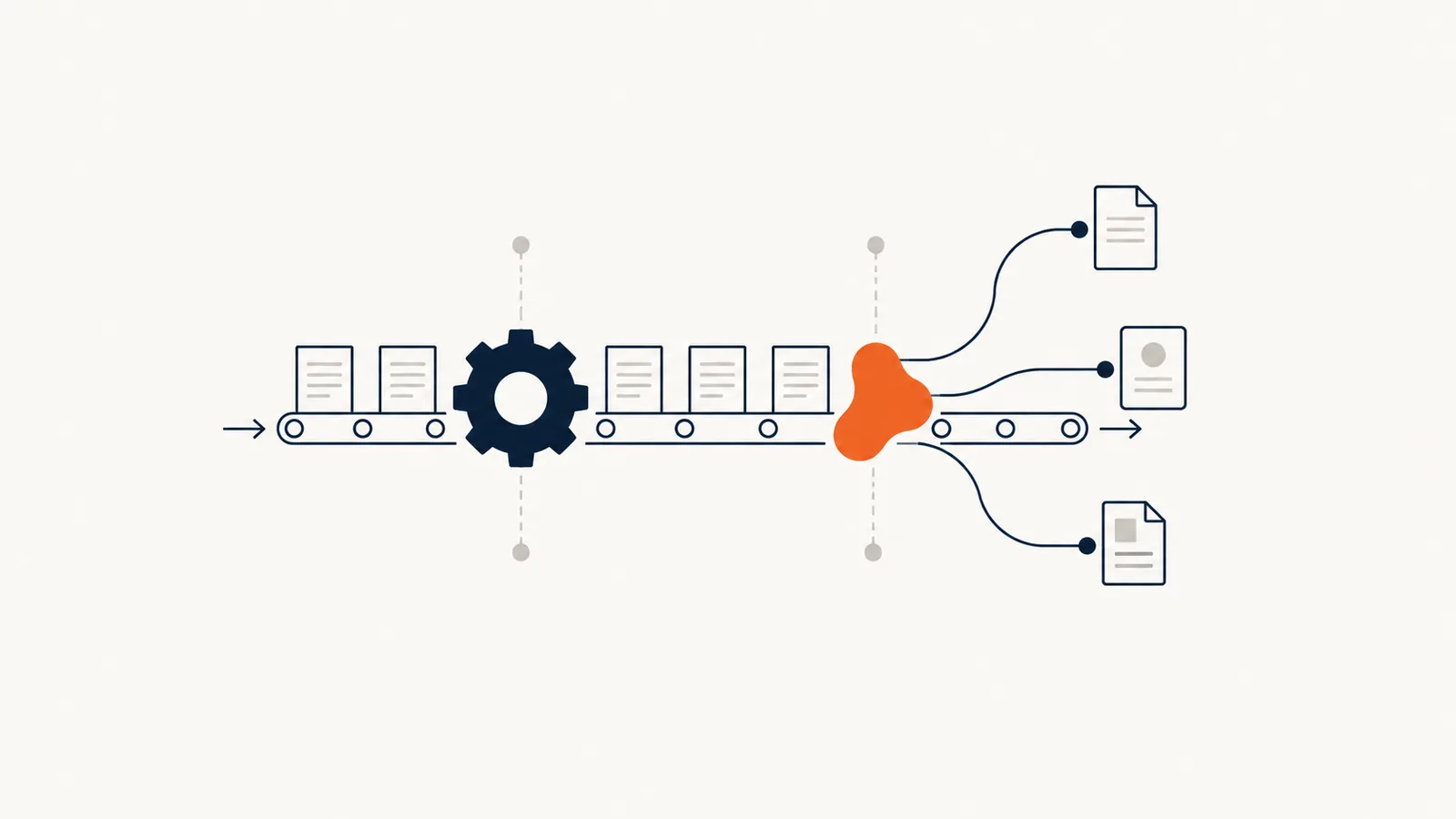
OpenAI uses OAI-SearchBot for its search features and GPTBot for crawling related to model training. The two settings are independent. A business can allow the search crawler while refusing the training crawler. You should also make sure your firewall isn't blocking the access you've allowed. Source: OpenAI documentation.
Allowing crawling makes access easier. It guarantees neither a citation nor a recommendation.
How do you measure your visibility?
Track identifiable visits from AI engines, cited URLs, brand mentions, and above all qualified inquiries. For manual checks, keep the same set of questions and note the date, the service used, and the sources displayed.
Answers can vary with the context and the moment. A single search where your business appears or disappears isn't enough to establish a trend. Visits don't capture every mention either: a reader can read an answer without clicking.
Which actions should you start with?
- Check that your important pages are accessible and describe your offer accurately.
- Build out one case study and one guide based on a question you often hear from prospects.
- Set up simple tracking that connects visibility, cited sources, and the inquiries you really receive.
Gamache.ai supports this work on content clarity and visibility, described on our sales and customer service page. Let's talk about your business to review which pages and which proof deserve your attention first.
Frequently asked questions
Does GEO replace SEO?
No. It builds on it. A page that Google can neither crawl nor understand has little chance of being picked up by a generative engine. The basics stay the same: accessibility, clarity, useful content.
Do you need an llms.txt file?
Not for Google: its guide says no new machine-readable file or AI text file is required to appear in its generative features. Other services might take it into account; check their documentation before you spend time on it.
Can anyone guarantee a recommendation from ChatGPT or another assistant?
No. Nobody can guarantee that. What you can do is make your business easier to understand and to cite, then measure what happens over time.
Should you block AI crawlers?
That's a business decision. Blocking the search crawler lowers your chances of being cited. Blocking the training crawler is a separate choice, and it doesn't keep you from appearing in search answers.